Archive for the ‘DC Microgrid’ Category
Hola, en esta oportunidad les comparto los slides de mi conferencia titulada «Smart Grids: concepto, modelamiento y experiencias» que he dado en el siguiente evento:
CoP 2026 August session – Smart Grids
https://cop.impulsouth.org/events/cop-august-session-smart-grids/
11 August, 2026 de 9:20 a 10:00 (hora de Lima, Perú)
Organizado por: Global South Just Energy Transition – Community of Practice https://cop.impulsouth.org/


Atentamente:
Dr. Jorge Luis Mírez Tarrillo
Group of Mathematical Modeling and Numerical Simulation (GMMNS).
Universidad Nacional de Ingeniería. Lima, Perú.
E-mail: jmirez@uni.edu.pe
Website Personal: https://jorgemirez2002.wixsite.com/jorgemirez
Facebook http://www.facebook.com/jorgemirezperu
Linkedin https://www.linkedin.com/in/jorge-luis-mirez-tarrillo-94918423/
Scopus ID: https://www.scopus.com/authid/detail.uri?authorId=56488109800
Google Scholar: https://scholar.google.com/citations?user=_dSpp4YAAAAJ
MATLAB Group Admin in Facebook: https://www.facebook.com/groups/Matlab.Simulink.for.All
Jorge Mírez WhatsApp Channel/Canal: https://whatsapp.com/channel/0029VbCvpZsAYlUSz2esek2y
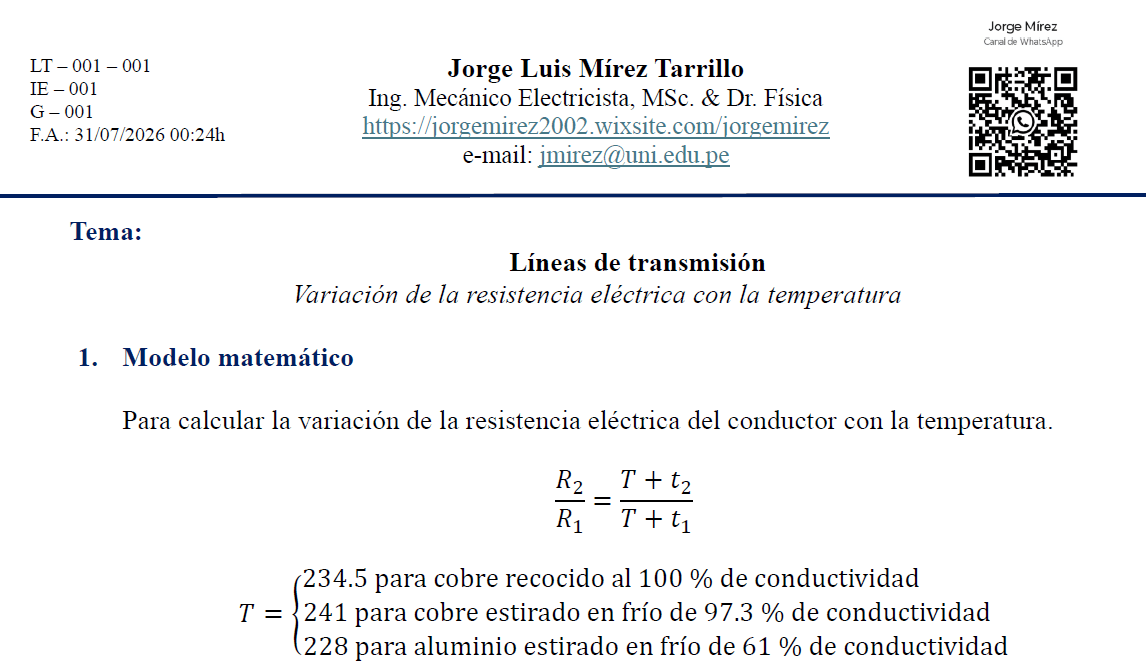
Estimados lectores, Se ha desarrollado dos códigos para calcular la variación de la resistencia eléctrica del conductor con la temperatura en líneas eléctricas de transmisión de potencia eléctrica. El modelo matemático considera el material del conductor, así como las temperaturas inicial y final del conductor, para determinar la resistencia eléctrica del conductor cual la temperatura se ha incrementado cierto valor. Se dan dos escenarios de estudio con un primer resultado que es una gráfica 2D (en el cual la resistencia final está en función de la temperatura final) y una gráfica 3D (en el cual la resistencia final está en función de temperatura final e inicial); en ambos casos la resistencia inicial es unitaria, lo cual permite visualizar el cambio que se presenta en la resistencia eléctrica. Como está en código, los valores se pueden cambiar según uso que se quiera dar el usuario. Archivo ZIP con tres archivos: PDF y dos códigos MATLAB formato *.m disponible en:

G_001: Un modelo de variación de la resistencia eléctrica con la temperatura en líneas de transmisión de potencia
Archivo ZIP con tres archivos: PDF y dos códigos MATLAB formato *.m que contienen un estudio de como cambiar la resistencia eléctrica de un conductor de línea de transmisión eléctrica al variar la temperatura final y, temperatura inicial y final, del mismo.
Dr. Jorge Luis Mírez Tarrillo
Group of Mathematical Modeling and Numerical Simulation (GMMNS).
Universidad Nacional de Ingeniería. Lima, Perú.
E-mail: jmirez@uni.edu.pe
Website Personal: https://jorgemirez2002.wixsite.com/jorgemirez
Facebook http://www.facebook.com/jorgemirezperu
Linkedin https://www.linkedin.com/in/jorge-luis-mirez-tarrillo-94918423/
Scopus ID: https://www.scopus.com/authid/detail.uri?authorId=56488109800
Google Scholar: https://scholar.google.com/citations?user=_dSpp4YAAAAJ
MATLAB Group Admin in Facebook: https://www.facebook.com/groups/Matlab.Simulink.for.All
Jorge Mírez WhatsApp Channel/Canal: https://whatsapp.com/channel/0029VbCvpZsAYlUSz2esek2y
J1162: Libro «Evolución de los sistemas energéticos en Iberoamérica». Link para leer y descargar PDF
Les invito a consultar el libro «Evolución de los sistemas energéticos en Iberoamérica» en el cual se explora la evolución y estado actual de los sistemas de energía en España, Argentina, Colombia, Cuba, México, Paraguay, Puerto Rico, Ecuador, El Salvador, Uruguay, Panamá, Honduras, República Dominicana, Venezuela, Perú, Costa Rica, Bolivia, Brasil y Guatemala. Los trabajos que conforman el libro son contribuciones de los miembros de la Red RIBIERSE-CYTED – Red para la integración a gran escala de energías renovables en los sistemas eléctricos; cuyo objetivo es promover la descarbonización del sector eléctrico gracias a la integración de fuentes renovables en los sistemas eléctricos y su hibridación con sistemas de almacenamiento y la ‘E-Mobility’. https://zenodo.org/records/15602611

Dr. Jorge Luis Mírez Tarrillo
Group of Mathematical Modeling and Numerical Simulation (GMMNS).
Universidad Nacional de Ingeniería. Lima, Perú.
E-mail: jmirez@uni.edu.pe
Website Personal: https://jorgemirez2002.wixsite.com/jorgemirez
Facebook http://www.facebook.com/jorgemirezperu
Linkedin https://www.linkedin.com/in/jorge-luis-mirez-tarrillo-94918423/
Scopus ID: https://www.scopus.com/authid/detail.uri?authorId=56488109800
Google Scholar: https://scholar.google.com/citations?user=_dSpp4YAAAAJ
MATLAB Group Admin in Facebook: https://www.facebook.com/groups/Matlab.Simulink.for.All
WhatsApp Channel/Canal: https://whatsapp.com/channel/0029VbCvpZsAYlUSz2esek2y
En el mundo de las energías renovables, las microrredes surgen como elementos organizativos de diferentes fuentes y cargas ubicados dentro de un espacio geográfico delimitado y con uno o más puntos de interconexión sea con otra microrred o con la red eléctrica pública. Paneles solares fotovoltaicos, turbinass eólicas, almacenamiento electroquímico, etc. son parte de sus componentes. La demanda igualmente puede ser residencial, comercial o industrial. Todo esto crea comportamiento de la demanda que es atendido por la oferta y en algún momento pueda haber déficil o sobrante. La figura del presente post muestra un ejemplo acerca de ello, en que tres microrredes debido a sus comportamientos propios, presentan diferente necesidad y sobrante en el tiempo. Hecho con MATLAB.

Dr. Jorge Luis Mírez Tarrillo
Group of Mathematical Modeling and Numerical Simulation (GMMNS).
Universidad Nacional de Ingeniería. Lima, Perú.
E-mail: jmirez@uni.edu.pe
Website Personal: https://jorgemirez2002.wixsite.com/jorgemirez
Facebook http://www.facebook.com/jorgemirezperu
Linkedin https://www.linkedin.com/in/jorge-luis-mirez-tarrillo-94918423/
Scopus ID: https://www.scopus.com/authid/detail.uri?authorId=56488109800
Google Scholar: https://scholar.google.com/citations?user=_dSpp4YAAAAJ
MATLAB Group Admin in Facebook: https://www.facebook.com/groups/Matlab.Simulink.for.All
WhatsApp Channel/Canal: https://whatsapp.com/channel/0029VbCvpZsAYlUSz2esek2y
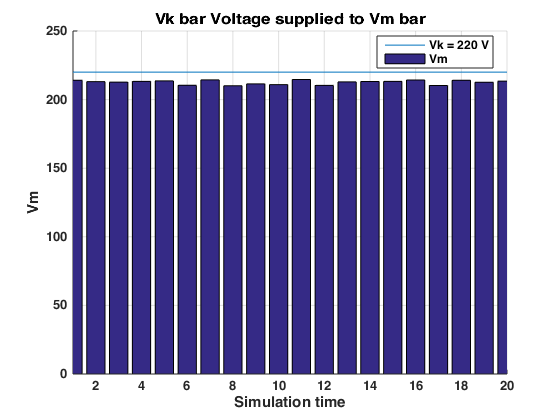
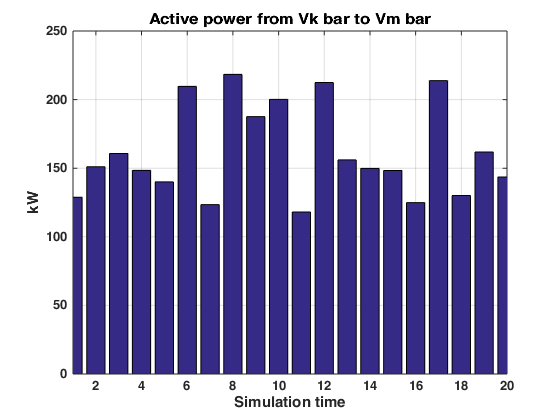
En una configuración de dos barras en DC, la diferencia de voltaje determina la cantidad de energía que fluye por unidad de tiempo, se llama potencia eléctrica, y; que en las dos gráficas del presente post se puede apreciar. En una se observa la diferencia de voltaje considerando la barra fuente con voltaje constante, usualmente asociado a su conexión con un gran sistema eléctrica de potencia o por la autoregulación de voltaje de una fuente. En la otra gráfica, el flujo de potencia eléctrica producido por esa la diferencia de voltaje respectiva. Hecho en MATLAB, con generación de números aleatorios, para lo que vengo investigando que con las DC Microgrids.
Dr. Jorge Luis Mírez Tarrillo
Group of Mathematical Modeling and Numerical Simulation (GMMNS).
Universidad Nacional de Ingeniería. Lima, Perú.
E-mail: jmirez@uni.edu.pe
Website Personal: https://jorgemirez2002.wixsite.com/jorgemirez
Facebook http://www.facebook.com/jorgemirezperu
Linkedin https://www.linkedin.com/in/jorge-luis-mirez-tarrillo-94918423/
Scopus ID: https://www.scopus.com/authid/detail.uri?authorId=56488109800
Google Scholar: https://scholar.google.com/citations?user=_dSpp4YAAAAJ
MATLAB Group Admin in Facebook: https://www.facebook.com/groups/Matlab.Simulink.for.All
WhatsApp Channel/Canal: https://whatsapp.com/channel/0029VbCvpZsAYlUSz2esek2y
Invitación a participar del Webinar: Microrredes Eléctricas. Expositor: Dr. Jorge Mírez. Jueves 30 de Marzo 2023. Hora: 16:00 horas México (17:00 horas Lima)
Link de Registro Expo Energía México 2023:
https://www.expoenergia.com.mx/Webinar/index.php

Dr. Jorge Luis Mírez Tarrillo
Group of Mathematical Modeling and Numerical Simulation (GMMNS).
Universidad Nacional de Ingeniería. Lima, Perú.
E-mail: jmirez@uni.edu.pe
Website Personal: https://jorgemirez2002.wixsite.com/jorgemirez
Facebook http://www.facebook.com/jorgemirezperu
Linkedin https://www.linkedin.com/in/jorge-luis-mirez-tarrillo-94918423/
Scopus ID: https://www.scopus.com/authid/detail.uri?authorId=56488109800
Google Scholar: https://scholar.google.com/citations?user=_dSpp4YAAAAJ
MATLAB Group Admin in Facebook: https://www.facebook.com/groups/Matlab.Simulink.for.All
WhatsApp Channel/Canal: https://whatsapp.com/channel/0029VbCvpZsAYlUSz2esek2y
Link in IEEExplore: https://ieeexplore.ieee.org/document/9140175
DOI: 10.1109/ICMEAE.2019.00034
Abstract:
This article includes a compilation and analysis of relevant information on the state of the art of the implementation of the Droop Control technique in microgrids. To this end, a summary and compilation of the theoretical models of the Droop Control and a summary of implementations have been made and, in general, try to summarize the great variety of experiences developed in this topic. The chosen experiences have been selected according to the research motivations that are available in the future and that are explained throughout this article, since this will serve as a starting point and guide for future research in microgrids and similar novel topics such as Low Voltage Distribution in Direct Current (LV DC) and DC microgrids (DC MG). The LV DC distribution for this article is related to houses in direct current (DC Home).
Gratefully for this news !!
Regards:
Dr. Jorge Luis Mírez Tarrillo
Group of Mathematical Modeling and Numerical Simulation (GMMNS).
Universidad Nacional de Ingeniería. Lima, Perú.
E-mail: jmirez@uni.edu.pe
Website Personal: https://jorgemirez2002.wixsite.com/jorgemirez
Facebook http://www.facebook.com/jorgemirezperu
Linkedin https://www.linkedin.com/in/jorge-luis-mirez-tarrillo-94918423/
Scopus ID: https://www.scopus.com/authid/detail.uri?authorId=56488109800
Google Scholar: https://scholar.google.com/citations?user=_dSpp4YAAAAJ
MATLAB Group Admin in Facebook: https://www.facebook.com/groups/Matlab.Simulink.for.All
WhatsApp Channel/Canal: https://whatsapp.com/channel/0029VbCvpZsAYlUSz2esek2y
ESPOCH 50 años ‘Congreso Internacional ESPOCH 50 años’. Un espacio de investigación con expositores de todo el mundo.
Expositor: Dr. Jorge Luis Mírez Tarrillo
Tema: Microrredes Eléctricas
Institución: Universidad Nacional de Ingeniería, Lima, Perú.
https://fb.watch/cGlrOoPc9s/
Dr. Jorge Luis Mírez Tarrillo
Group of Mathematical Modeling and Numerical Simulation (GMMNS).
Universidad Nacional de Ingeniería. Lima, Perú.
E-mail: jmirez@uni.edu.pe
Website Personal: https://jorgemirez2002.wixsite.com/jorgemirez
Facebook http://www.facebook.com/jorgemirezperu
Linkedin https://www.linkedin.com/in/jorge-luis-mirez-tarrillo-94918423/
Scopus ID: https://www.scopus.com/authid/detail.uri?authorId=56488109800
Google Scholar: https://scholar.google.com/citations?user=_dSpp4YAAAAJ
MATLAB Group Admin in Facebook: https://www.facebook.com/groups/Matlab.Simulink.for.All
WhatsApp Channel/Canal: https://whatsapp.com/channel/0029VbCvpZsAYlUSz2esek2y
Estimados lectores. Han pasado 10 años desde que vine por primera vez a la ESPOCH – Escuela Politécnica del Chimborazo en Riobamba, Ecuador. En aquel momento era un estudiante que iniciaba sus estudios de doctorado en física con el ánimo de aportar a lo que ahora es redes eléctricas inteligentes o avanzadas y energías renovables. Ahora, 2022, participo gracias a la invitación de la Facultad de Ciencias de la ESPOCH de las actividades de celebración por los 50 años de Fundación de esta universidad, y es muy grato nuevamente recorrer sus ambientes, re-encontrarme con los amigos que nunca perdimos la comunicación a pesar de la distancia y conocer nuevos colegas, estudiantes y acordar los trabajos de colaboración a futuro. De hecho me toca hacer una exposición y será éste miércoles a las 2:30 pm con el tema: Microrredes Eléctricas Inteligentes… y ésta será un resumen de lo recorrido, de los conceptos básicos, los aportes en la operación, control, optimización, así como la experiencia de modelar matemáticamente las microrredes y sus componentes y de hacer simulación numérica, e ideas concepto y visión de nuevos trabajos; todo esto expuesto en base a las publicaciones Scopus hechas en estos años. Siento que la vida me trae por acá para una pausa en el ajetreo diario y nuevamente interactuar y ver en la labor académica, el motivo de vida que más mejores resultados me ha dado en la vida junto con la familia. Es momento de reactivas blogs, redes sociales y nuevamente centrarme en usar mis conocimientos para la investigación ahora ya abordando redes eléctricas inteligentes, ingeniería biomédica, ingeniería aeroespacial, ingeniería inversa de culturas incas y preincas y hay mucho material borrador que la vida y sus circunstancias hizo que deje de atender, pero es momento de retornar. Gracias a las instituciones, universidades, colegas, amigos y familiares que siempre apoyan, todos en su momento como arte de magia salen al encuentro en el camino de la vida. Gracias ESPOCH, Riobamba y Ecuador, en especial al Dr. Celso Recalde y su equipo de la Facultad de Ciencias. Atentamente: ING. Jorge Luis Mírez Tarrillo.

Dr. Jorge Luis Mírez Tarrillo
Group of Mathematical Modeling and Numerical Simulation (GMMNS).
Universidad Nacional de Ingeniería. Lima, Perú.
E-mail: jmirez@uni.edu.pe
Website Personal: https://jorgemirez2002.wixsite.com/jorgemirez
Facebook http://www.facebook.com/jorgemirezperu
Linkedin https://www.linkedin.com/in/jorge-luis-mirez-tarrillo-94918423/
Scopus ID: https://www.scopus.com/authid/detail.uri?authorId=56488109800
Google Scholar: https://scholar.google.com/citations?user=_dSpp4YAAAAJ
MATLAB Group Admin in Facebook: https://www.facebook.com/groups/Matlab.Simulink.for.All
WhatsApp Channel/Canal: https://whatsapp.com/channel/0029VbCvpZsAYlUSz2esek2y
Dear readers, in the large cities and interurban spaces increasingly populated by the increase in the world population, it will be possible in the near future – if it does not exist now – to be able to configure the electrical loads in sets of multi-nanogrids. and / or multi-microgrids. All of them can have their own storage or have a storage for all of them. The figure, shows that I have been able to model and simulate the behavior of the energy stored in a storage source that collects or supplies energy to all nanogrids and / or microgrids. Its importance lies in sharing the surpluses to supply those that lack energy. If there is surplus, then know how much value they can get. If there is a deficit between all of them, the energy purchase will be made. Here they enter to carve different types of technologies between power electronics, control and protection systems. Random behavior has been considered anyway, as it is what happens in real life. While this is all mathematical modeling and numerical simulation, real data can be added. I hope it is of interest to you and I leave my contact information at the signing of this post. Regards.

Dr. Jorge Luis Mírez Tarrillo
Group of Mathematical Modeling and Numerical Simulation (GMMNS).
Universidad Nacional de Ingeniería. Lima, Perú.
E-mail: jmirez@uni.edu.pe
Website Personal: https://jorgemirez2002.wixsite.com/jorgemirez
Facebook http://www.facebook.com/jorgemirezperu
Linkedin https://www.linkedin.com/in/jorge-luis-mirez-tarrillo-94918423/
Scopus ID: https://www.scopus.com/authid/detail.uri?authorId=56488109800
Google Scholar: https://scholar.google.com/citations?user=_dSpp4YAAAAJ
MATLAB Group Admin in Facebook: https://www.facebook.com/groups/Matlab.Simulink.for.All
WhatsApp Channel/Canal: https://whatsapp.com/channel/0029VbCvpZsAYlUSz2esek2y
Estimados lectores, en las grandes ciudades y espacios interurbanos cada vez más poblados por el incremento en la población mundial, se va a tener en el futuro próximo – si es que no se tiene – el poder configurar las cargas eléctricas en conjuntos de multi-nanogrids y/o multi-microgrids. Todas ellas pueden tener su propio almacenamiento o tener un almacenamiento para todas ellas. La figura muestra que he podido modelar y simular el comportamiento de la energía guardada en una fuente de almacenamiento que recoge o suple de energía a todas las nanogrids y/o microgrids. Su importancia radica en el compartir los sobrantes para abastecer a las que les falta energía. Si existe sobrante pues saber hasta que valor pueden llegar. Si hay déficit entre todas as ellas, se realizar la compra de energía. Acá entran a tallar diferentes tipos de tecnologías entre electrónica de potencia, sistemas de control y protección. El comportamiento aleatorio ha sido considerado de todas maneras, pues es lo que sucede en la vida real. Si bien todo esto es modelamiento matemático y simulación numérica, se puede agregar datos reales si los hubiera. Espero sea de su interés y dejo mis datos de contacto en la firma del presente post. Gracias.
Dr. Jorge Luis Mírez Tarrillo
Group of Mathematical Modeling and Numerical Simulation (GMMNS).
Universidad Nacional de Ingeniería. Lima, Perú.
E-mail: jmirez@uni.edu.pe
Website Personal: https://jorgemirez2002.wixsite.com/jorgemirez
Facebook http://www.facebook.com/jorgemirezperu
Linkedin https://www.linkedin.com/in/jorge-luis-mirez-tarrillo-94918423/
Scopus ID: https://www.scopus.com/authid/detail.uri?authorId=56488109800
Google Scholar: https://scholar.google.com/citations?user=_dSpp4YAAAAJ
MATLAB Group Admin in Facebook: https://www.facebook.com/groups/Matlab.Simulink.for.All
WhatsApp Channel/Canal: https://whatsapp.com/channel/0029VbCvpZsAYlUSz2esek2y
Dear readers, I am grateful for the multiple visits each day to my different blogs. On the subject of renewable energies, there are concepts such as microgrids (a cell with the ability to connect and disconnect from the Public Electricity Grid (PEG) through a Common Coupling Point with a capacity of up to 10 MW) and nanogrids (a unit of Generally a small residential and / or commercial load equipped with renewable sources such as photovoltaic solar panels, wind turbines or others plus a storage system. Nanogrids and microgrids must work with other similar ones in a coordinated way and sharing resources that they have surplus to Some, transfer it to others. With this, in front of the PEG, the microgrids / nanogrids arrangements that we will call multi-nanogrids – multi-microgrids must present a global balance of excess or missing power of all. The image of this post shows an axis of states – to generalize – how the deficit and surplus of the power that houses the entire set of multi-nanogrids – mult i-microgrids. I hope it is of interest to you and I leave my contact information at the signing of this post. Regards.

Dr. Jorge Luis Mírez Tarrillo
Group of Mathematical Modeling and Numerical Simulation (GMMNS).
Universidad Nacional de Ingeniería. Lima, Perú.
E-mail: jmirez@uni.edu.pe
Website Personal: https://jorgemirez2002.wixsite.com/jorgemirez
Facebook http://www.facebook.com/jorgemirezperu
Linkedin https://www.linkedin.com/in/jorge-luis-mirez-tarrillo-94918423/
Scopus ID: https://www.scopus.com/authid/detail.uri?authorId=56488109800
Google Scholar: https://scholar.google.com/citations?user=_dSpp4YAAAAJ
MATLAB Group Admin in Facebook: https://www.facebook.com/groups/Matlab.Simulink.for.All
WhatsApp Channel/Canal: https://whatsapp.com/channel/0029VbCvpZsAYlUSz2esek2y
Estimados lectores, quedo agradecido por las múltiples visitas de cada día a mis diferentes blogs. En el tema de las energías renovables se encuentra conceptos como microgrids (una célula con capacidad de conectarse y desconectarse de la Red Eléctrica Pública (REP) a través de un Punto de Común Acoplamiento con capacidad de hasta 10 MW) y nanogrids (una unidad de carga por lo general residencial y/o comercial de pequeño tamaño dotado de fuentes de renovables como paneles solares fotovoltaicos, turbinas eólicas u otras más un sistema de almacenamiento. Nanogrids y microgrids deben trabajar con otros similares de manera coordinada y compartiendo recursos que le sobren a unos, lo transfieran a los demás. Con ello, frente a la REP los arreglos de microgrids/nanogrids que llamaremos multi-nanogrids – multi-microgrids deben presentar en global un balance de potencia sobrante o faltante de entre todos. La gráfica del presente post muestra un eje de estados – para generalizar – como se presenta el déficit y el sobrante de la potencia que alberga a todo el conjunto de multi-nanogrids – multi-microgrids. Espero sea de su interés y dejo mis datos de contacto en la firma del presente post. Regards.
Dr. Jorge Luis Mírez Tarrillo
Group of Mathematical Modeling and Numerical Simulation (GMMNS).
Universidad Nacional de Ingeniería. Lima, Perú.
E-mail: jmirez@uni.edu.pe
Website Personal: https://jorgemirez2002.wixsite.com/jorgemirez
Facebook http://www.facebook.com/jorgemirezperu
Linkedin https://www.linkedin.com/in/jorge-luis-mirez-tarrillo-94918423/
Scopus ID: https://www.scopus.com/authid/detail.uri?authorId=56488109800
Google Scholar: https://scholar.google.com/citations?user=_dSpp4YAAAAJ
MATLAB Group Admin in Facebook: https://www.facebook.com/groups/Matlab.Simulink.for.All
WhatsApp Channel/Canal: https://whatsapp.com/channel/0029VbCvpZsAYlUSz2esek2y
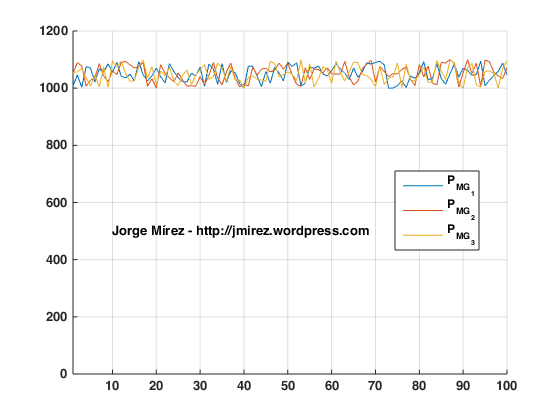
Good morning dear readers of my blog. Currently I am developing research on the interconnection of three energy blocks (microgrids), which in its most general version, are three cells that exchange information. The codes are elaborated in Matlab from MathWorks Inc., with the intention of publishing in magazines / journals with an impact factor (SJR).
Dr. Jorge Luis Mírez Tarrillo
Group of Mathematical Modeling and Numerical Simulation (GMMNS).
Universidad Nacional de Ingeniería. Lima, Perú.
E-mail: jmirez@uni.edu.pe
Website Personal: https://jorgemirez2002.wixsite.com/jorgemirez
Facebook http://www.facebook.com/jorgemirezperu
Linkedin https://www.linkedin.com/in/jorge-luis-mirez-tarrillo-94918423/
Scopus ID: https://www.scopus.com/authid/detail.uri?authorId=56488109800
Google Scholar: https://scholar.google.com/citations?user=_dSpp4YAAAAJ
MATLAB Group Admin in Facebook: https://www.facebook.com/groups/Matlab.Simulink.for.All
WhatsApp Channel/Canal: https://whatsapp.com/channel/0029VbCvpZsAYlUSz2esek2y

As a wind turbine generator, a permanent magnet synchronous generator (PMSG) is used in this post. Mechanical energy is acquired from the kinetic energy of the wind through a wind turbine, and the PMSG converts this energy to electrical energy. The PMSG output is converted to DC power through a thyristor rectifier. The output power of the wind turbine is equal to the DC converted power if the losses in the generator and rectifier are negligible.
Referencia: S. M. Muyeen “Wind Energy Conversion Systems – Technology and Trends” Springer. New York. DOI 10.1007/978-1-4471-2201-2
Regards:
Dr. Jorge Luis Mírez Tarrillo
Group of Mathematical Modeling and Numerical Simulation (GMMNS).
Universidad Nacional de Ingeniería. Lima, Perú.
E-mail: jmirez@uni.edu.pe
Website Personal: https://jorgemirez2002.wixsite.com/jorgemirez
Facebook http://www.facebook.com/jorgemirezperu
Linkedin https://www.linkedin.com/in/jorge-luis-mirez-tarrillo-94918423/
Scopus ID: https://www.scopus.com/authid/detail.uri?authorId=56488109800
Google Scholar: https://scholar.google.com/citations?user=_dSpp4YAAAAJ
MATLAB Group Admin in Facebook: https://www.facebook.com/groups/Matlab.Simulink.for.All
WhatsApp Channel/Canal: https://whatsapp.com/channel/0029VbCvpZsAYlUSz2esek2y
Como generador de turbina de viento, un generador sincrónico de imanes permanentes (PMSG) es usado en el presente post. La energía mecánica es adquirida de la energía cinética del viento a través de una turbina de viento, y el PMSG convierte ésta energía a energía eléctrica. La salida de PMSG es convertida a potencia DC a través de un rectificador de tiristores. La potencia de salida de la turbina de viento es igual a la potencia convertida DC si las pérdidas en el generador y rectificador son despreciables.
Referencia: S. M. Muyeen «Wind Energy Conversion Systems – Technology and Trends» Springer. New York. DOI 10.1007/978-1-4471-2201-2
Regards:
Dr. Jorge Luis Mírez Tarrillo
Group of Mathematical Modeling and Numerical Simulation (GMMNS).
Universidad Nacional de Ingeniería. Lima, Perú.
E-mail: jmirez@uni.edu.pe
Website Personal: https://jorgemirez2002.wixsite.com/jorgemirez
Facebook http://www.facebook.com/jorgemirezperu
Linkedin https://www.linkedin.com/in/jorge-luis-mirez-tarrillo-94918423/
Scopus ID: https://www.scopus.com/authid/detail.uri?authorId=56488109800
Google Scholar: https://scholar.google.com/citations?user=_dSpp4YAAAAJ
MATLAB Group Admin in Facebook: https://www.facebook.com/groups/Matlab.Simulink.for.All
WhatsApp Channel/Canal: https://whatsapp.com/channel/0029VbCvpZsAYlUSz2esek2y
J1115: Entrevista hecha por la Revista Energía de Chile en el marco del Congreso BioBio Energía 2018
Durante el Congreso BioBio Energía 2018 que se realizó en la Ciudad de Concepción, la Revista Energía me hizo una entrevista cuyas preguntas y respuestas se plasman en el link líneas abajo. Dicha entrevista fue del todo cordial, amena, técnica y entretenida; pues la temática y el entorno del evento permitían un clima adecuado de fluencia de opiniones e ideas. Les dejo con ésta lectura que espero sea de su interés.

Link de la entrevista: https://www.revistaenergia.com/19388/
Dr. Jorge Luis Mírez Tarrillo
Group of Mathematical Modeling and Numerical Simulation (GMMNS).
Universidad Nacional de Ingeniería. Lima, Perú.
E-mail: jmirez@uni.edu.pe
Website Personal: https://jorgemirez2002.wixsite.com/jorgemirez
Facebook http://www.facebook.com/jorgemirezperu
Linkedin https://www.linkedin.com/in/jorge-luis-mirez-tarrillo-94918423/
Scopus ID: https://www.scopus.com/authid/detail.uri?authorId=56488109800
Google Scholar: https://scholar.google.com/citations?user=_dSpp4YAAAAJ
MATLAB Group Admin in Facebook: https://www.facebook.com/groups/Matlab.Simulink.for.All
WhatsApp Channel/Canal: https://whatsapp.com/channel/0029VbCvpZsAYlUSz2esek2y
 Source: Antonio Moreno-Munoz. “Large Scale Grid Integration of Renewable Energy Sources”. The Institution of Engineering and Technology. 2017.
Dr. Jorge Luis Mírez Tarrillo
Group of Mathematical Modeling and Numerical Simulation (GMMNS).
Universidad Nacional de Ingeniería. Lima, Perú.
E-mail: jmirez@uni.edu.pe
Website Personal: https://jorgemirez2002.wixsite.com/jorgemirez
Facebook http://www.facebook.com/jorgemirezperu
Linkedin https://www.linkedin.com/in/jorge-luis-mirez-tarrillo-94918423/
Scopus ID: https://www.scopus.com/authid/detail.uri?authorId=56488109800
Google Scholar: https://scholar.google.com/citations?user=_dSpp4YAAAAJ
MATLAB Group Admin in Facebook: https://www.facebook.com/groups/Matlab.Simulink.for.All
WhatsApp Channel/Canal: https://whatsapp.com/channel/0029VbCvpZsAYlUSz2esek2y
Source: Antonio Moreno-Munoz. “Large Scale Grid Integration of Renewable Energy Sources”. The Institution of Engineering and Technology. 2017.
Dr. Jorge Luis Mírez Tarrillo
Group of Mathematical Modeling and Numerical Simulation (GMMNS).
Universidad Nacional de Ingeniería. Lima, Perú.
E-mail: jmirez@uni.edu.pe
Website Personal: https://jorgemirez2002.wixsite.com/jorgemirez
Facebook http://www.facebook.com/jorgemirezperu
Linkedin https://www.linkedin.com/in/jorge-luis-mirez-tarrillo-94918423/
Scopus ID: https://www.scopus.com/authid/detail.uri?authorId=56488109800
Google Scholar: https://scholar.google.com/citations?user=_dSpp4YAAAAJ
MATLAB Group Admin in Facebook: https://www.facebook.com/groups/Matlab.Simulink.for.All
WhatsApp Channel/Canal: https://whatsapp.com/channel/0029VbCvpZsAYlUSz2esek2y
IEEE Conference on Mechatronics, Electronics and Automotive Engineering – ICMEAE 2019. Cuernavaca, México. Nov 26 – 29, 2019.
https://www.facebook.com/icmeae/
http://www.icmeae.org.mx

Dr. Jorge Luis Mírez Tarrillo
Group of Mathematical Modeling and Numerical Simulation (GMMNS).
Universidad Nacional de Ingeniería. Lima, Perú.
E-mail: jmirez@uni.edu.pe
Website Personal: https://jorgemirez2002.wixsite.com/jorgemirez
Facebook http://www.facebook.com/jorgemirezperu
Linkedin https://www.linkedin.com/in/jorge-luis-mirez-tarrillo-94918423/
Scopus ID: https://www.scopus.com/authid/detail.uri?authorId=56488109800
Google Scholar: https://scholar.google.com/citations?user=_dSpp4YAAAAJ
MATLAB Group Admin in Facebook: https://www.facebook.com/groups/Matlab.Simulink.for.All
WhatsApp Channel/Canal: https://whatsapp.com/channel/0029VbCvpZsAYlUSz2esek2y
«Microgrid of DC/AC voltage powered by solar, wind, batteries and conventional sources». Jorge Mírez. Perfiles. Edition Nº 10 – [January – December 2013]. Available in: http://ceaa.espoch.edu.ec:8080/revista.perfiles/Articuloshtml/Perfiles10Art5/Perfiles10Art5.xhtml

Dr. Jorge Luis Mírez Tarrillo
Group of Mathematical Modeling and Numerical Simulation (GMMNS).
Universidad Nacional de Ingeniería. Lima, Perú.
E-mail: jmirez@uni.edu.pe
Website Personal: https://jorgemirez2002.wixsite.com/jorgemirez
Facebook http://www.facebook.com/jorgemirezperu
Linkedin https://www.linkedin.com/in/jorge-luis-mirez-tarrillo-94918423/
Scopus ID: https://www.scopus.com/authid/detail.uri?authorId=56488109800
Google Scholar: https://scholar.google.com/citations?user=_dSpp4YAAAAJ
MATLAB Group Admin in Facebook: https://www.facebook.com/groups/Matlab.Simulink.for.All
WhatsApp Channel/Canal: https://whatsapp.com/channel/0029VbCvpZsAYlUSz2esek2y
Blog in ENGLISH

Compra/Buy – Haz una donación/Make a donation

Dear reader, if you wish to make a donation or are interested in any information or code, please contact me (e-mail: jmirez@uni.edu.pe). Donations will allow you to continue studying and researching, and also to provide more information on this blog. My PayPal account is jorgemirez2002@gmail.com or if it is by bank transfer write to my email jmirez@uni.edu.pe. Any amount of money is welcome. Thank you.
Estimado lector, si desean hacer una donación o le interesa alguna información o código, favor ponerse en contacto con mi persona (e-mail: jmirez@uni.edu.pe). Las donaciones va a permitir seguir estudiando e investigando, y además, el poder brindar más información en este blog. Mi cuenta en PayPal es jorgemirez2002@gmail.com o si es por transferencia bancaria escribirme a mi correo jmirez@uni.edu.pe. Cualquier cantidad de dinero es bienvenido. Gracias.
Datos Generales
Good day. My full name is Jorge Luis MIREZ TARRILLO.
I am Peruvian and live in Lima, capital of Perú in South America.I am Mechanical Electrical Engineering, MSc Physics and Dr. Physics (title doctoral thesis: Control, Optimization, and Management of Microgrid Current Direct)
Too, actually job as Principal Professor in Faculty of Oil, Gas and Petrochemical Engineering of Universidad Nacional de Ingeniería (National University of Engineering) in Lima – PERU (Courses: Modern Physics, Differential Equations and Research's Methodology)
My subjects of my interest are control, signal processing, optimization, simulation, biomedical research, smart grid, microgrid, water.
I have experience in Matlab/Simulink programming, biomedical equipment, electrical systems, renewable energies, microgrids, saturated steam systems 100 psi and organizing academic events.

Comentarios Recientes
Elementos que compon… en J506: Los elementos de un paqu… Dr. Jorge Mírez en Message by IEEE Community Dr. Jorge Mírez en J546: Simulación de campos mag… jose luis huayanay v… en Message by IEEE Community Cesar Aviles en J546: Simulación de campos mag… Dr. Jorge Mírez en J518: La herramienta pdetool d… Dr. Jorge Mírez en J496: Simulación en Matlab/Sim… Raúl Barrios Elizarr… en J496: Simulación en Matlab/Sim… jose luis huayanay v… en J518: La herramienta pdetool d… MSc. Jorge Mírez en J281: La Rosa de Vientos: Frec…


Debe estar conectado para enviar un comentario.