Archive for the ‘Biomasa’ Category
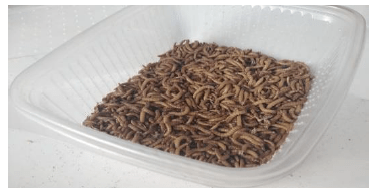
Buenas horas. Resulta que no siempre hay que crear una solución basada en máquinas o similares para solucionar un problema. Podemos ayudarnos de otros seres vivos que en la Naturaleza por miles, millones de años han hecho una labor de limpieza o cambios del entorno. Por ejemplo se tienen los gusanos (como el Tenebrio Mollitor) que pueden digerir plásticos en forma de espuma, los deboran y digieren limpiando el medio ambiente de estos plásticos que de manera natural demorarían decenas y quizás cientos de años en ser degradadas. De manera similar, habrán muchos casos similares que se deben investigar, modelar y simular su comportamiento en escala mayor para saber su influencia en la comunidad y los beneficios que puede traer a la humanidad. El modelamiento matemático es muy útil en esto, y para que tomen vida realizo las simulaciones en MATLAB/Simulink.
Dr. Jorge Luis Mírez Tarrillo
Group of Mathematical Modeling and Numerical Simulation (GMMNS).
Universidad Nacional de Ingeniería. Lima, Perú.
E-mail: jmirez@uni.edu.pe
Website Personal: https://jorgemirez2002.wixsite.com/jorgemirez
Facebook http://www.facebook.com/jorgemirezperu
Linkedin https://www.linkedin.com/in/jorge-luis-mirez-tarrillo-94918423/
Scopus ID: https://www.scopus.com/authid/detail.uri?authorId=56488109800
Google Scholar: https://scholar.google.com/citations?user=_dSpp4YAAAAJ
MATLAB Group Admin in Facebook: https://www.facebook.com/groups/Matlab.Simulink.for.All
WhatsApp Channel/Canal: https://whatsapp.com/channel/0029VbCvpZsAYlUSz2esek2y
J1162: Libro «Evolución de los sistemas energéticos en Iberoamérica». Link para leer y descargar PDF
Les invito a consultar el libro «Evolución de los sistemas energéticos en Iberoamérica» en el cual se explora la evolución y estado actual de los sistemas de energía en España, Argentina, Colombia, Cuba, México, Paraguay, Puerto Rico, Ecuador, El Salvador, Uruguay, Panamá, Honduras, República Dominicana, Venezuela, Perú, Costa Rica, Bolivia, Brasil y Guatemala. Los trabajos que conforman el libro son contribuciones de los miembros de la Red RIBIERSE-CYTED – Red para la integración a gran escala de energías renovables en los sistemas eléctricos; cuyo objetivo es promover la descarbonización del sector eléctrico gracias a la integración de fuentes renovables en los sistemas eléctricos y su hibridación con sistemas de almacenamiento y la ‘E-Mobility’. https://zenodo.org/records/15602611

Dr. Jorge Luis Mírez Tarrillo
Group of Mathematical Modeling and Numerical Simulation (GMMNS).
Universidad Nacional de Ingeniería. Lima, Perú.
E-mail: jmirez@uni.edu.pe
Website Personal: https://jorgemirez2002.wixsite.com/jorgemirez
Facebook http://www.facebook.com/jorgemirezperu
Linkedin https://www.linkedin.com/in/jorge-luis-mirez-tarrillo-94918423/
Scopus ID: https://www.scopus.com/authid/detail.uri?authorId=56488109800
Google Scholar: https://scholar.google.com/citations?user=_dSpp4YAAAAJ
MATLAB Group Admin in Facebook: https://www.facebook.com/groups/Matlab.Simulink.for.All
WhatsApp Channel/Canal: https://whatsapp.com/channel/0029VbCvpZsAYlUSz2esek2y

Regards time, the ultimate consumer burns a fuel whose chemical composition varies, see Figure. These variations bring problems for plant operation, whatever is the prime mover (Internal Combustion engine, gas turbine or boiler).
Methane number (MN) characterizes gaseous fuel tendency to auto-ignition. By convention, this index has a value 100 for methane and 0 for hydrogen (Leiker et al., 1972). The gaseous fuels are thus compared with a methane-hydrogen binary mixture. Two gases with same value MN have the same resistance against the spontaneous combustion.
Source:
Natural Gas : Physical Properties and Combustion Features.
By Olivier Le Corre and Khaled Loubar
Dr. Jorge Luis Mírez Tarrillo
Group of Mathematical Modeling and Numerical Simulation (GMMNS).
Universidad Nacional de Ingeniería. Lima, Perú.
E-mail: jmirez@uni.edu.pe
Website Personal: https://jorgemirez2002.wixsite.com/jorgemirez
Facebook http://www.facebook.com/jorgemirezperu
Linkedin https://www.linkedin.com/in/jorge-luis-mirez-tarrillo-94918423/
Scopus ID: https://www.scopus.com/authid/detail.uri?authorId=56488109800
Google Scholar: https://scholar.google.com/citations?user=_dSpp4YAAAAJ
MATLAB Group Admin in Facebook: https://www.facebook.com/groups/Matlab.Simulink.for.All
WhatsApp Channel/Canal: https://whatsapp.com/channel/0029VbCvpZsAYlUSz2esek2y
«A mathematical model of SmartValley for estimation of contribution of biomass to the electrical generation»
Jorge Mírez ; Segundo Horna ; Daniel Carranza
2019 IEEE International Autumn Meeting on Power, Electronics and Computing (ROPEC). Ixtapa, Mexico, Mexico
Abstract:
A mathematical model is presented for the estimation of the contribution of biomass to the generation of electricity for a valley as a geographical scope of application. Is considered that a valley has several species that are cultivated during the year and that have by-products of the harvest that we have considered as biomass that can be used for the production of electricity that would benefit the valley’s inhabiting community. We have called this integration between population and crops SmartValley, which leads to the use of monitoring, control, management and planning among the different agricultural-energy actors.
Link: https://ieeexplore.ieee.org/document/9057045
Gratefully for this news !!
Regards:
Dr. Jorge Luis Mírez Tarrillo – PERU
Facebook http://www.facebook.com/jorgemirezperu
Linkedin https://www.linkedin.com/in/jorge-luis-mirez-tarrillo-94918423/
E-mail: jmirez@uni.edu.pe
Dr. Jorge Luis Mírez Tarrillo
Group of Mathematical Modeling and Numerical Simulation (GMMNS).
Universidad Nacional de Ingeniería. Lima, Perú.
E-mail: jmirez@uni.edu.pe
Website Personal: https://jorgemirez2002.wixsite.com/jorgemirez
Facebook http://www.facebook.com/jorgemirezperu
Linkedin https://www.linkedin.com/in/jorge-luis-mirez-tarrillo-94918423/
Scopus ID: https://www.scopus.com/authid/detail.uri?authorId=56488109800
Google Scholar: https://scholar.google.com/citations?user=_dSpp4YAAAAJ
MATLAB Group Admin in Facebook: https://www.facebook.com/groups/Matlab.Simulink.for.All
WhatsApp Channel/Canal: https://whatsapp.com/channel/0029VbCvpZsAYlUSz2esek2y
- Slow pyrolysis at low temperatures of around 400°C and long reaction times (which can range from 15 minutes to days in traditional beehive kilns) maximises charcoal yields at about 30% wt.
- Flash pyrolysis at temperatures of typically 500°C; at very high heating rates and short vapour residence times of typically less than 1 second or 500 ms; maximises liquid yields at up to 85% wt (wet basis) or up to 70% dry basis.
- Similar flash pyrolysis at relatively high temperatures of above 700°C; at very high heating rates and similarly short residence times maximises gas yields at up to 80% wt. with minimum liquid and char production.
- «Conventional» pyrolysis at moderate temperatures of less than about 500°C and low heating rates (with vapour residence times of 0.5 to 5 minutes) gives approximately equal proportions of gas liquid and solid products
 Source: A. Bridgwater. Thermal biomass conversion and utilization – Biomass information system. European Commission – Agro-Industrial Research Division. 1996
Regards:
Dr. Jorge Luis Mírez Tarrillo
Group of Mathematical Modeling and Numerical Simulation (GMMNS).
Universidad Nacional de Ingeniería. Lima, Perú.
E-mail: jmirez@uni.edu.pe
Website Personal: https://jorgemirez2002.wixsite.com/jorgemirez
Facebook http://www.facebook.com/jorgemirezperu
Linkedin https://www.linkedin.com/in/jorge-luis-mirez-tarrillo-94918423/
Scopus ID: https://www.scopus.com/authid/detail.uri?authorId=56488109800
Google Scholar: https://scholar.google.com/citations?user=_dSpp4YAAAAJ
MATLAB Group Admin in Facebook: https://www.facebook.com/groups/Matlab.Simulink.for.All
WhatsApp Channel/Canal: https://whatsapp.com/channel/0029VbCvpZsAYlUSz2esek2y
Source: A. Bridgwater. Thermal biomass conversion and utilization – Biomass information system. European Commission – Agro-Industrial Research Division. 1996
Regards:
Dr. Jorge Luis Mírez Tarrillo
Group of Mathematical Modeling and Numerical Simulation (GMMNS).
Universidad Nacional de Ingeniería. Lima, Perú.
E-mail: jmirez@uni.edu.pe
Website Personal: https://jorgemirez2002.wixsite.com/jorgemirez
Facebook http://www.facebook.com/jorgemirezperu
Linkedin https://www.linkedin.com/in/jorge-luis-mirez-tarrillo-94918423/
Scopus ID: https://www.scopus.com/authid/detail.uri?authorId=56488109800
Google Scholar: https://scholar.google.com/citations?user=_dSpp4YAAAAJ
MATLAB Group Admin in Facebook: https://www.facebook.com/groups/Matlab.Simulink.for.All
WhatsApp Channel/Canal: https://whatsapp.com/channel/0029VbCvpZsAYlUSz2esek2y
There are four thermochemical methods of converting biomass: pyrolysis, gasification, liquefaction and direct combustion. Each gives a different range of products and employs different equipment configurations operating in different modes. These are summarised below in figure

Source: A. Bridgwater. Thermal biomass conversion and utilization – Biomass information system. European Commission – Agro-Industrial Research Division. 1996
Regards:
Dr. Jorge Luis Mírez Tarrillo
Group of Mathematical Modeling and Numerical Simulation (GMMNS).
Universidad Nacional de Ingeniería. Lima, Perú.
E-mail: jmirez@uni.edu.pe
Website Personal: https://jorgemirez2002.wixsite.com/jorgemirez
Facebook http://www.facebook.com/jorgemirezperu
Linkedin https://www.linkedin.com/in/jorge-luis-mirez-tarrillo-94918423/
Scopus ID: https://www.scopus.com/authid/detail.uri?authorId=56488109800
Google Scholar: https://scholar.google.com/citations?user=_dSpp4YAAAAJ
MATLAB Group Admin in Facebook: https://www.facebook.com/groups/Matlab.Simulink.for.All
WhatsApp Channel/Canal: https://whatsapp.com/channel/0029VbCvpZsAYlUSz2esek2y
Burning harvested organic matter – biomass – provided most of mankind’s energy needs for millennia. Using such fuels remains the primary energy source for many people in developing and emerging economies, but such “traditional use” of biomass is often unsustainable, with inefficient combustion leading to harmful emissions with serious health implications.
Modern technologies can convert this organic matter to solid, liquid and gaseous forms that can more efficiently provide for energy needs and replace fossil fuels. A wide range of biomass feedstocks can be used as sources of bioenergy. These include: wet organic wastes, such as sewage sludge, animal wastes and organic liquid effluents, and the organic fraction of municipal solid waste (MSW); residues and co-products from agroindustries and the timber industry; crops grown for energy, including food crops such as corn, wheat, sugar and vegetable oils produced from palm, rapeseed and other raw materials; and nonfood crops such as perennial lignocellulosic plants (e.g. grasses such as miscanthus and trees such as short-rotation willow and eucalyptus) and oilbearing plants (such as jatropha and camelina).
Many processes are available to turn these feedstocks into a product that can be used for electricity, heat or transport. The figure illustrates a number of the main pathways available for these applications (IEA and FAO, 2017). The most common pathways to date have been: the production of heat and power from wood, agricultural residues and the biogenic fraction of wastes; maize and sugarcane to ethanol; and rapeseed, soybean and oil crops to biodiesel. Each of these bioenergy pathways consists of several steps, which include biomass production, collection or harvesting, processing to improve the physical characteristics of the fuel, pre-treatment to alter chemical properties, and finally conversion of the biomass to useful energy. The number of these steps may differ depending on the type, location and source of biomass, and the technology used to provide the relevant final energy use.

Source: International Energy Agency. “Technology Roadmap: Delivering Sustainable Bioenergy” http://www.iea.org
Dr. Jorge Luis Mírez Tarrillo
Group of Mathematical Modeling and Numerical Simulation (GMMNS).
Universidad Nacional de Ingeniería. Lima, Perú.
E-mail: jmirez@uni.edu.pe
Website Personal: https://jorgemirez2002.wixsite.com/jorgemirez
Facebook http://www.facebook.com/jorgemirezperu
Linkedin https://www.linkedin.com/in/jorge-luis-mirez-tarrillo-94918423/
Scopus ID: https://www.scopus.com/authid/detail.uri?authorId=56488109800
Google Scholar: https://scholar.google.com/citations?user=_dSpp4YAAAAJ
MATLAB Group Admin in Facebook: https://www.facebook.com/groups/Matlab.Simulink.for.All
WhatsApp Channel/Canal: https://whatsapp.com/channel/0029VbCvpZsAYlUSz2esek2y
To provide an understanding of the current market landscape for bioenergy, an overview of market developments across the heat, electricity and transport sectors over the 2010-16 period is provided. This highlights key market trends since the production of the previous IEA technology roadmaps on bioenergy, and puts the longer-term scenarios in this roadmap into context.
Biomass and waste are already a significant global energy source, accounting for over 70% of all renewable energy production, and making a contribution to final energy consumption in 2015 that was roughly equivalent to that of coal. The largest end use of biomass and waste remains the traditional use of biomass, which is generally considered an unsustainable application of these resources. The focus of this publication is modern bioenergy solutions; the term bioenergy is generally used to refer to these and exclude the traditional use of biomass. Modern bioenergy consumption is largest in the heat sector, although bioenergy for electricity and transport biofuels is growing faster, mainly due to higher levels of policy support

Source: International Energy Agency. «Technology Roadmap: Delivering Sustainable Bioenergy» http://www.iea.org
Dr. Jorge Luis Mírez Tarrillo
Group of Mathematical Modeling and Numerical Simulation (GMMNS).
Universidad Nacional de Ingeniería. Lima, Perú.
E-mail: jmirez@uni.edu.pe
Website Personal: https://jorgemirez2002.wixsite.com/jorgemirez
Facebook http://www.facebook.com/jorgemirezperu
Linkedin https://www.linkedin.com/in/jorge-luis-mirez-tarrillo-94918423/
Scopus ID: https://www.scopus.com/authid/detail.uri?authorId=56488109800
Google Scholar: https://scholar.google.com/citations?user=_dSpp4YAAAAJ
MATLAB Group Admin in Facebook: https://www.facebook.com/groups/Matlab.Simulink.for.All
WhatsApp Channel/Canal: https://whatsapp.com/channel/0029VbCvpZsAYlUSz2esek2y
J1115: Entrevista hecha por la Revista Energía de Chile en el marco del Congreso BioBio Energía 2018
Durante el Congreso BioBio Energía 2018 que se realizó en la Ciudad de Concepción, la Revista Energía me hizo una entrevista cuyas preguntas y respuestas se plasman en el link líneas abajo. Dicha entrevista fue del todo cordial, amena, técnica y entretenida; pues la temática y el entorno del evento permitían un clima adecuado de fluencia de opiniones e ideas. Les dejo con ésta lectura que espero sea de su interés.

Link de la entrevista: https://www.revistaenergia.com/19388/
Dr. Jorge Luis Mírez Tarrillo
Group of Mathematical Modeling and Numerical Simulation (GMMNS).
Universidad Nacional de Ingeniería. Lima, Perú.
E-mail: jmirez@uni.edu.pe
Website Personal: https://jorgemirez2002.wixsite.com/jorgemirez
Facebook http://www.facebook.com/jorgemirezperu
Linkedin https://www.linkedin.com/in/jorge-luis-mirez-tarrillo-94918423/
Scopus ID: https://www.scopus.com/authid/detail.uri?authorId=56488109800
Google Scholar: https://scholar.google.com/citations?user=_dSpp4YAAAAJ
MATLAB Group Admin in Facebook: https://www.facebook.com/groups/Matlab.Simulink.for.All
WhatsApp Channel/Canal: https://whatsapp.com/channel/0029VbCvpZsAYlUSz2esek2y
IEEE Conference on Mechatronics, Electronics and Automotive Engineering – ICMEAE 2019. Cuernavaca, México. Nov 26 – 29, 2019.
https://www.facebook.com/icmeae/
http://www.icmeae.org.mx

Dr. Jorge Luis Mírez Tarrillo
Group of Mathematical Modeling and Numerical Simulation (GMMNS).
Universidad Nacional de Ingeniería. Lima, Perú.
E-mail: jmirez@uni.edu.pe
Website Personal: https://jorgemirez2002.wixsite.com/jorgemirez
Facebook http://www.facebook.com/jorgemirezperu
Linkedin https://www.linkedin.com/in/jorge-luis-mirez-tarrillo-94918423/
Scopus ID: https://www.scopus.com/authid/detail.uri?authorId=56488109800
Google Scholar: https://scholar.google.com/citations?user=_dSpp4YAAAAJ
MATLAB Group Admin in Facebook: https://www.facebook.com/groups/Matlab.Simulink.for.All
WhatsApp Channel/Canal: https://whatsapp.com/channel/0029VbCvpZsAYlUSz2esek2y
«Energy storage systems». Jorge Mírez. XIX Peruvian Symposium on Solar Energy and the Environment (XIX-SPES), Puno, 12-17.11.2012.
Available in: http://www.perusolar.org/wp-content/uploads/2013/01/3.pdf

Dr. Jorge Luis Mírez Tarrillo
Group of Mathematical Modeling and Numerical Simulation (GMMNS).
Universidad Nacional de Ingeniería. Lima, Perú.
E-mail: jmirez@uni.edu.pe
Website Personal: https://jorgemirez2002.wixsite.com/jorgemirez
Facebook http://www.facebook.com/jorgemirezperu
Linkedin https://www.linkedin.com/in/jorge-luis-mirez-tarrillo-94918423/
Scopus ID: https://www.scopus.com/authid/detail.uri?authorId=56488109800
Google Scholar: https://scholar.google.com/citations?user=_dSpp4YAAAAJ
MATLAB Group Admin in Facebook: https://www.facebook.com/groups/Matlab.Simulink.for.All
WhatsApp Channel/Canal: https://whatsapp.com/channel/0029VbCvpZsAYlUSz2esek2y

Dr. Jorge Luis Mírez Tarrillo
Group of Mathematical Modeling and Numerical Simulation (GMMNS).
Universidad Nacional de Ingeniería. Lima, Perú.
E-mail: jmirez@uni.edu.pe
Website Personal: https://jorgemirez2002.wixsite.com/jorgemirez
Facebook http://www.facebook.com/jorgemirezperu
Linkedin https://www.linkedin.com/in/jorge-luis-mirez-tarrillo-94918423/
Scopus ID: https://www.scopus.com/authid/detail.uri?authorId=56488109800
Google Scholar: https://scholar.google.com/citations?user=_dSpp4YAAAAJ
MATLAB Group Admin in Facebook: https://www.facebook.com/groups/Matlab.Simulink.for.All
WhatsApp Channel/Canal: https://whatsapp.com/channel/0029VbCvpZsAYlUSz2esek2y
PERU Green Smart Energy S.A.C. es una empresa peruana que se dedica al rubro de bienes y servicios en temas de ingeniería, energias renovables, expedientes técnicos, material audiovisual – publicitario y de capacitación, expedientes técnicos en ingenierias, arquitectura, ciencias de la salud, entre otros. También nos dedicamos a la investigación científica, cálculos técnicos y capacitación.
Gustoso de pertenecer a la familia de PGSE S.A.C. en donde doy toda mi experiencia y conocimientos.
Para más información, consultas y coordinaciones sobre los bienes y servicios que ofrecemos, visita nuestra página web:
Pronto comenzaremos con nuestras capacitaciones virtuales (en español) con certificación. Lo estaremos promocionando con tiempo, pero les recomendamos ser nuestros seguidores dándole click en Me Gusta  de nuestro fanpage para mantenerse informado de las novedades
Fanpage de PGSE S.A.C. (darle Me Gusta):
http://www.facebook.com/PeruGreenSmartEnergySAC
Atentamente:
Jorge Luis Mírez Tarrillo
Ing. Mecánico Electricista – MSc & Dr. Física.
Dr. Jorge Luis Mírez Tarrillo
Group of Mathematical Modeling and Numerical Simulation (GMMNS).
Universidad Nacional de Ingeniería. Lima, Perú.
E-mail: jmirez@uni.edu.pe
Website Personal: https://jorgemirez2002.wixsite.com/jorgemirez
Facebook http://www.facebook.com/jorgemirezperu
Linkedin https://www.linkedin.com/in/jorge-luis-mirez-tarrillo-94918423/
Scopus ID: https://www.scopus.com/authid/detail.uri?authorId=56488109800
Google Scholar: https://scholar.google.com/citations?user=_dSpp4YAAAAJ
MATLAB Group Admin in Facebook: https://www.facebook.com/groups/Matlab.Simulink.for.All
WhatsApp Channel/Canal: https://whatsapp.com/channel/0029VbCvpZsAYlUSz2esek2y
Hoy jueves 27 diciembre 2018 recibí el Diploma de Doctor en Ciencias mención Física por la Universidad Nacional de Ingeniería, Lima, Perú. // Today, Thursday, December 27, 2018, I received the Diploma of Doctor of Sciences with mention in Physics (Dr. Physics) from the National University of Engineering, Lima, Peru.
Algunas fotos // some photos:

Recibiendo el diploma en Oficina de Grados y Títulos de la Universidad Nacional de Ingeniería, Lima, Perú. // Receiving a diploma in the Office of Degrees of the National University of Engineering, Lima, Peru.

En frente al Rectorado de la Universidad Nacional de Ingeniería, Lima, Perú // In front of the Rector’s Office of the National University of Engineering, Lima, Perú.

Con mi asesor Dr. Manfred Horn (a mi co-asesor Dr. Josep Guerrero en la Universidad de Aalborg, Dinamarca, muchas gracias también) // With my advisor Dr. Manfred Horn (a my co-advisor Dr. Josep Guerrero at the University of Aalborg, Denmark, thank you very much too) //
De mi fanpage // of my Fanpage:
Gracias a todos… A quienes estuvieron, están y/o estarán en este camino… Gracias por su espera, paciencia, enseñanzas, cariño, alegrías… estas cosas no se logran de la noche a la mañana… Queda aún algunos años para devolver lo recibido de la vida… Hoy jueves 27 Diciembre 2018 recibí el diploma de Doctor en Ciencias con mención en Física y al igual que mis grados y títulos anteriores me fue entregado en Ventanilla de una Oficina de Grados y Títulos y está bien, porque todos somos capaces, todos somos seres humanos… // Thank you all … Those who were, are and / or will be on this path … Thank you for your wait, patience, teachings, affection, joys … these things are not achieved overnight … There are still some years to return the received of life … Today, Thursday, December 27, 2018, I received a Doctor of Science degree with a mention in Physics and, like my previous degrees and diplomas, it was delivered to me in the Office of Degrees and Titles and that’s fine, because we’re all capable, we’re all human beings …. Fuente/Source: http://www.facebook.com/jorgemirezperu
Email: jmirez@uni.edu.pe
Dr. Jorge Luis Mírez Tarrillo
Group of Mathematical Modeling and Numerical Simulation (GMMNS).
Universidad Nacional de Ingeniería. Lima, Perú.
E-mail: jmirez@uni.edu.pe
Website Personal: https://jorgemirez2002.wixsite.com/jorgemirez
Facebook http://www.facebook.com/jorgemirezperu
Linkedin https://www.linkedin.com/in/jorge-luis-mirez-tarrillo-94918423/
Scopus ID: https://www.scopus.com/authid/detail.uri?authorId=56488109800
Google Scholar: https://scholar.google.com/citations?user=_dSpp4YAAAAJ
MATLAB Group Admin in Facebook: https://www.facebook.com/groups/Matlab.Simulink.for.All
WhatsApp Channel/Canal: https://whatsapp.com/channel/0029VbCvpZsAYlUSz2esek2y
Escribir al correo para que puedan ingresar a la universidad, el evento no tiene costo y de todas las universidades y demás instituciones públicas y privadas pueden ingresar …
Dar «Me Gusta a mi Fanpage – es probable que lo transmitamos»
Fanpage: https://www.facebook.com/jorgemirezperu/
Write to the mail so they can enter the university, the event has no cost and all universities and other public and private institutions can enter …
Give «I like my Fanpage – we transmit it through»
Fanpage: https://www.facebook.com/jorgemirezperu/

Dr. Jorge Luis Mírez Tarrillo
Group of Mathematical Modeling and Numerical Simulation (GMMNS).
Universidad Nacional de Ingeniería. Lima, Perú.
E-mail: jmirez@uni.edu.pe
Website Personal: https://jorgemirez2002.wixsite.com/jorgemirez
Facebook http://www.facebook.com/jorgemirezperu
Linkedin https://www.linkedin.com/in/jorge-luis-mirez-tarrillo-94918423/
Scopus ID: https://www.scopus.com/authid/detail.uri?authorId=56488109800
Google Scholar: https://scholar.google.com/citations?user=_dSpp4YAAAAJ
MATLAB Group Admin in Facebook: https://www.facebook.com/groups/Matlab.Simulink.for.All
WhatsApp Channel/Canal: https://whatsapp.com/channel/0029VbCvpZsAYlUSz2esek2y
Buenas horas a todos los que leen este mi blog.
A pedido de la comunidad transmití un videochat en el que hablé sobre energías renovables, ingeniería eléctrica y otros temas que iban pidiendo mediante mensajes, y cuyos enlaces lo coloco en el presente post para los seguidores de éste mi blog.
Espero les interese y presto a brindar mis servicios de consultoría y capacitación en temas de sistemas eléctricos, energías renovables, equipamiento para hospitales, elaboración y desarrollo de investigaciones, además de expedientes de instalaciones eléctricas y mecánicas; tanto a nivel nacional (Perú) como internacional. Mi email de contacto es jmirez@uni.edu.pe y por WhatsApp a +51970030394
PD: Información adicional lo pueden encontrar en mi fanpagehttp://wwwfacebook.com/jorgemirezperu y en mi blog de energías renovables y Matlab/Simulink https://jmirez.wordpress.com, otros blogs y redes sociales de interés lo pueden encontrar en http://www.geocities.ws/jorgemirez
Parte 1:
Parte 2:
Dr. Jorge Luis Mírez Tarrillo
Group of Mathematical Modeling and Numerical Simulation (GMMNS).
Universidad Nacional de Ingeniería. Lima, Perú.
E-mail: jmirez@uni.edu.pe
Website Personal: https://jorgemirez2002.wixsite.com/jorgemirez
Facebook http://www.facebook.com/jorgemirezperu
Linkedin https://www.linkedin.com/in/jorge-luis-mirez-tarrillo-94918423/
Scopus ID: https://www.scopus.com/authid/detail.uri?authorId=56488109800
Google Scholar: https://scholar.google.com/citations?user=_dSpp4YAAAAJ
MATLAB Group Admin in Facebook: https://www.facebook.com/groups/Matlab.Simulink.for.All
WhatsApp Channel/Canal: https://whatsapp.com/channel/0029VbCvpZsAYlUSz2esek2y

Dr. Jorge Luis Mírez Tarrillo
Group of Mathematical Modeling and Numerical Simulation (GMMNS).
Universidad Nacional de Ingeniería. Lima, Perú.
E-mail: jmirez@uni.edu.pe
Website Personal: https://jorgemirez2002.wixsite.com/jorgemirez
Facebook http://www.facebook.com/jorgemirezperu
Linkedin https://www.linkedin.com/in/jorge-luis-mirez-tarrillo-94918423/
Scopus ID: https://www.scopus.com/authid/detail.uri?authorId=56488109800
Google Scholar: https://scholar.google.com/citations?user=_dSpp4YAAAAJ
MATLAB Group Admin in Facebook: https://www.facebook.com/groups/Matlab.Simulink.for.All
WhatsApp Channel/Canal: https://whatsapp.com/channel/0029VbCvpZsAYlUSz2esek2y

Página Web: http://jmirez.wixsite.com/mapchota2016
Fanpage: https://www.facebook.com/mapchota2016/
PD: Se invita a los que desean grabarlo, transmitirlo por radio, TV y/o cable el evento.
Link Transmisión en Vivo y en Directo en Español
Dr. Jorge Luis Mírez Tarrillo
Group of Mathematical Modeling and Numerical Simulation (GMMNS).
Universidad Nacional de Ingeniería. Lima, Perú.
E-mail: jmirez@uni.edu.pe
Website Personal: https://jorgemirez2002.wixsite.com/jorgemirez
Facebook http://www.facebook.com/jorgemirezperu
Linkedin https://www.linkedin.com/in/jorge-luis-mirez-tarrillo-94918423/
Scopus ID: https://www.scopus.com/authid/detail.uri?authorId=56488109800
Google Scholar: https://scholar.google.com/citations?user=_dSpp4YAAAAJ
MATLAB Group Admin in Facebook: https://www.facebook.com/groups/Matlab.Simulink.for.All
WhatsApp Channel/Canal: https://whatsapp.com/channel/0029VbCvpZsAYlUSz2esek2y


Se invita a todos los que desean participar como Ponentes de este Encuentro. Las reglas son:
-
Las ponencias serán de al menos 15 minutos.
-
Hay espacio para 24 ponencias de 15 minutos.
-
Las ponencias serán transmitidas vía internet por dos canales de YouTube (uno en español y otro en inglés con traductor en vivo).
-
Los ponentes enviarán hasta el 21 de diciembre sus ponencias y CV para ser colocados en el Programa del evento.
-
El modelo del CV en formato Word está disponible en el siguiente link: https://jmirez.com/wp-content/uploads/2016/12/map-chota-2016_nombreyapellidoponente_cv.docx
-
El modelo de la presentación en formato PPT está disponible en: https://jmirez.com/wp-content/uploads/2016/12/ppt_mar-chota-2016_autor.pptx
-
Los archivo PPT y Word enviarlo a jmirez@uni.edu.pe
Motivación del Encuentro
Las fiestas de fin de año reúnen a la familia y amigos, para lo cual se da el retorno de estudiantes, académicos y profesionales desde sus centros de estudio, investigación y de trabajo a sus ciudades de origen (en los diferentes ciudades y pueblos a nivel nacional) a pasarla en familia, con las amistades o simplemente es un tiempo de retorno a nuestros lugares de origen.
Este es un motivo especial para reunirnos para conocernos y compartir lo realizado durante el año mediante la conversación y ponencias tanto en lo académico y en las experiencias profesionales sean éstas realizadas en el sector público como privado.
Chota, la Atenas del Norte del Perú, se viste de gala al organizar el MAP Chota 2016 e invita a ser parte de este encuentro entre estudiantes de escuelas, colegios, pregrado y postgrado, académicos, profesores, padres de familia, investigadores, profesionales, organizaciones de base y sociedad en general de fin de año 2016 y hacemos el llamado a todas las ciudades del Perú a que se realicen eventos similares, y hacemos extensivo también a todos los pueblos y ciudades de América Latina.
Durante el MAP Chota 2016 estamos organizando algunas actividades extras: como un compartir; feria tecnológica, artesanal y artística; exposición de fotografías y de libros.
Las seis horas que durará el evento quedará guardado en YouTube y la participación en el evento como Ponente o Asistente es totalmente libre y gratuito. Quedan todos invitados a participar.
Página Web del Encuentro http://jmirez.wixsite.com/mapchota2016
Dr. Jorge Luis Mírez Tarrillo
Group of Mathematical Modeling and Numerical Simulation (GMMNS).
Universidad Nacional de Ingeniería. Lima, Perú.
E-mail: jmirez@uni.edu.pe
Website Personal: https://jorgemirez2002.wixsite.com/jorgemirez
Facebook http://www.facebook.com/jorgemirezperu
Linkedin https://www.linkedin.com/in/jorge-luis-mirez-tarrillo-94918423/
Scopus ID: https://www.scopus.com/authid/detail.uri?authorId=56488109800
Google Scholar: https://scholar.google.com/citations?user=_dSpp4YAAAAJ
MATLAB Group Admin in Facebook: https://www.facebook.com/groups/Matlab.Simulink.for.All
WhatsApp Channel/Canal: https://whatsapp.com/channel/0029VbCvpZsAYlUSz2esek2y


URGENTE— Compartan !!
Desastre total Imposible Controlar el Fuego, se Necesita Apoyo aéreo Inmediato… a quien corresponda, incendio forestal en el Distrito de Conchán, provincia de Chota en la región Cajamarca se ha descontrolado, cientos de héctareas de montaña han sido arrasados, la ciudad de Chota, capital de la provincia hoy día está cubierta de humo completamente, la visibilidad es bien escasa, no se puede respirar… al lugar del incendio se han desplazado los recursos humanos disponibles policia, comuneros, bomberos, pero hay falta de agua y medios para transladarlos… la situación es muy seria… Pasar la voz a la Fuerza Aérea, compañias mineras o de petróleo/gas o quienes tengan los medios móviles aéreos para combatir el incendio (de Perú, Ecuador, Colombia que están cerca o quien pueda)… al momento toda personal con capacidad de combatir el incendio está que hace lo posible…
Fuente: Radio Andina Nov 18,2016
http://andinaradio.net/new/noticias/item/1220-chota-en-tinieblas-por-incendios-forestales.html
«El cielo de Chota luce con una capa de neblina que preocupa a la población. La humareda se debería a un incendio forestal ocasionado por personas inescrupulosas, sin embargo, también puede ser producto del clima que se vive en estos días. Esta situación preocupante se presenta en otros distritos de la provincia, tal es el caso de Conchán, específicamente Lascán, donde se habría originado un incendio perjudicando los bosques de pinos.El incendio generado, ayer a las 2 de la tarde, por Oscar Fernández Pardo (23), morador de la zona, se viene expandiendo agresivamente. Al momento, un 70 por ciento de bosques de pinos estarían siendo arrasados por el fuego, y se está expandiendo hasta un lugar denominado “Los toritos”. La humareda es insoportable y los niños tienen dificultades para respirar. Se está pidiendo el apoyo, urgente, de las instituciones, pobladores de la zona para controlar el fuego.
El fuego no solo está arrasando el bosque de pinos, sino que pone en riesgo los cultivos y la vida de ciertos animales. La situación es alarmante y piden de favor que se conduzcan a la zona para salvar el ambiente y evitar que las lenguas de fuego se sigan expandiendo.»
Dr. Jorge Luis Mírez Tarrillo
Group of Mathematical Modeling and Numerical Simulation (GMMNS).
Universidad Nacional de Ingeniería. Lima, Perú.
E-mail: jmirez@uni.edu.pe
Website Personal: https://jorgemirez2002.wixsite.com/jorgemirez
Facebook http://www.facebook.com/jorgemirezperu
Linkedin https://www.linkedin.com/in/jorge-luis-mirez-tarrillo-94918423/
Scopus ID: https://www.scopus.com/authid/detail.uri?authorId=56488109800
Google Scholar: https://scholar.google.com/citations?user=_dSpp4YAAAAJ
MATLAB Group Admin in Facebook: https://www.facebook.com/groups/Matlab.Simulink.for.All
WhatsApp Channel/Canal: https://whatsapp.com/channel/0029VbCvpZsAYlUSz2esek2y
Blog in ENGLISH

Compra/Buy – Haz una donación/Make a donation

Dear reader, if you wish to make a donation or are interested in any information or code, please contact me (e-mail: jmirez@uni.edu.pe). Donations will allow you to continue studying and researching, and also to provide more information on this blog. My PayPal account is jorgemirez2002@gmail.com or if it is by bank transfer write to my email jmirez@uni.edu.pe. Any amount of money is welcome. Thank you.
Estimado lector, si desean hacer una donación o le interesa alguna información o código, favor ponerse en contacto con mi persona (e-mail: jmirez@uni.edu.pe). Las donaciones va a permitir seguir estudiando e investigando, y además, el poder brindar más información en este blog. Mi cuenta en PayPal es jorgemirez2002@gmail.com o si es por transferencia bancaria escribirme a mi correo jmirez@uni.edu.pe. Cualquier cantidad de dinero es bienvenido. Gracias.
Datos Generales
Good day. My full name is Jorge Luis MIREZ TARRILLO.
I am Peruvian and live in Lima, capital of Perú in South America.I am Mechanical Electrical Engineering, MSc Physics and Dr. Physics (title doctoral thesis: Control, Optimization, and Management of Microgrid Current Direct)
Too, actually job as Principal Professor in Faculty of Oil, Gas and Petrochemical Engineering of Universidad Nacional de Ingeniería (National University of Engineering) in Lima – PERU (Courses: Modern Physics, Differential Equations and Research's Methodology)
My subjects of my interest are control, signal processing, optimization, simulation, biomedical research, smart grid, microgrid, water.
I have experience in Matlab/Simulink programming, biomedical equipment, electrical systems, renewable energies, microgrids, saturated steam systems 100 psi and organizing academic events.

Comentarios Recientes
Elementos que compon… en J506: Los elementos de un paqu… Dr. Jorge Mírez en Message by IEEE Community Dr. Jorge Mírez en J546: Simulación de campos mag… jose luis huayanay v… en Message by IEEE Community Cesar Aviles en J546: Simulación de campos mag… Dr. Jorge Mírez en J518: La herramienta pdetool d… Dr. Jorge Mírez en J496: Simulación en Matlab/Sim… Raúl Barrios Elizarr… en J496: Simulación en Matlab/Sim… jose luis huayanay v… en J518: La herramienta pdetool d… MSc. Jorge Mírez en J281: La Rosa de Vientos: Frec…


Debe estar conectado para enviar un comentario.